
Truckload vs. LTL: How Midwest Shippers Decide Which Mode to Use (And When They're Wrong)

Dan McClain • July 13, 2026

Share this article

The conventional wisdom goes like this: if your shipment is under 10,000 pounds, ship LTL. Over 10,000 pounds, book a truckload. It's a rule of thumb that's been floating around logistics operations for decades — and like most rules of thumb, it's right often enough to stick around and wrong often enough to cost real money.

Midwest shippers moving freight out of St. Louis, Columbus, Chicago, Minneapolis, Kansas City, and Indianapolis face a mode decision on nearly every shipment. Getting it wrong consistently adds up. Getting it right — considering the full picture instead of just weight — is one of the more accessible ways to reduce freight spend without changing anything about how or what you ship.

Why Weight Isn't the Whole Story

Weight matters, but density matters more in LTL pricing. Two shipments that weigh the same but occupy different amounts of trailer space will be priced differently. LTL carriers charge based on the higher of actual weight or dimensional weight — and if your freight is bulky but light, you may be paying for space you're filling rather than weight you're adding.

For a Midwest manufacturer shipping large-format industrial parts — say, formed sheet metal components from a Kansas City fabricator heading to an Indianapolis assembly plant — the dimensional weight on an LTL bill can be significantly higher than the actual weight would suggest. At that point, a truckload may pencil out even at partial capacity, especially if the lane is well-served and capacity is available.

The reverse is also true. Dense, heavy freight that fills less than half a trailer is often cheaper on LTL — particularly when transit time is flexible and the lane has multiple carriers with strong terminal coverage.

Transit Time: When Truckload Wins on Speed

LTL transit times have a built-in variability that truckload doesn't. A direct truckload move from St. Louis to Chicago is a three-to-four-hour run. The same freight on LTL might take one day or two, depending on when it gets picked up, how many terminal sorts it encounters, and whether it makes the linehaul cut at the origin terminal.

For time-sensitive shipments — automotive components heading to a Detroit assembly plant on a JIT schedule, retail inventory needing to hit a Columbus distribution center by Thursday for a weekend promotion — truckload's predictability often justifies the price premium. When the cost of missing a delivery window is higher than the freight cost difference between modes, truckload is the right answer regardless of shipment size.

Where this matters most for Midwest shippers is on shorter lanes. A Chicago to St. Louis move on LTL might be a same-day or next-day transit — but if the freight misses the afternoon sort at the Chicago terminal, it doesn't move until tomorrow. Truckload guarantees the move goes when you book it.

Damage Risk: The Hidden Cost in the Mode Decision

LTL freight gets handled multiple times between origin and delivery. Truckload freight gets loaded once and unloaded once. That's not an argument against LTL — it's an argument for thinking about damage risk as part of the mode calculation, especially for freight that's fragile, high-value, or difficult to replace quickly.

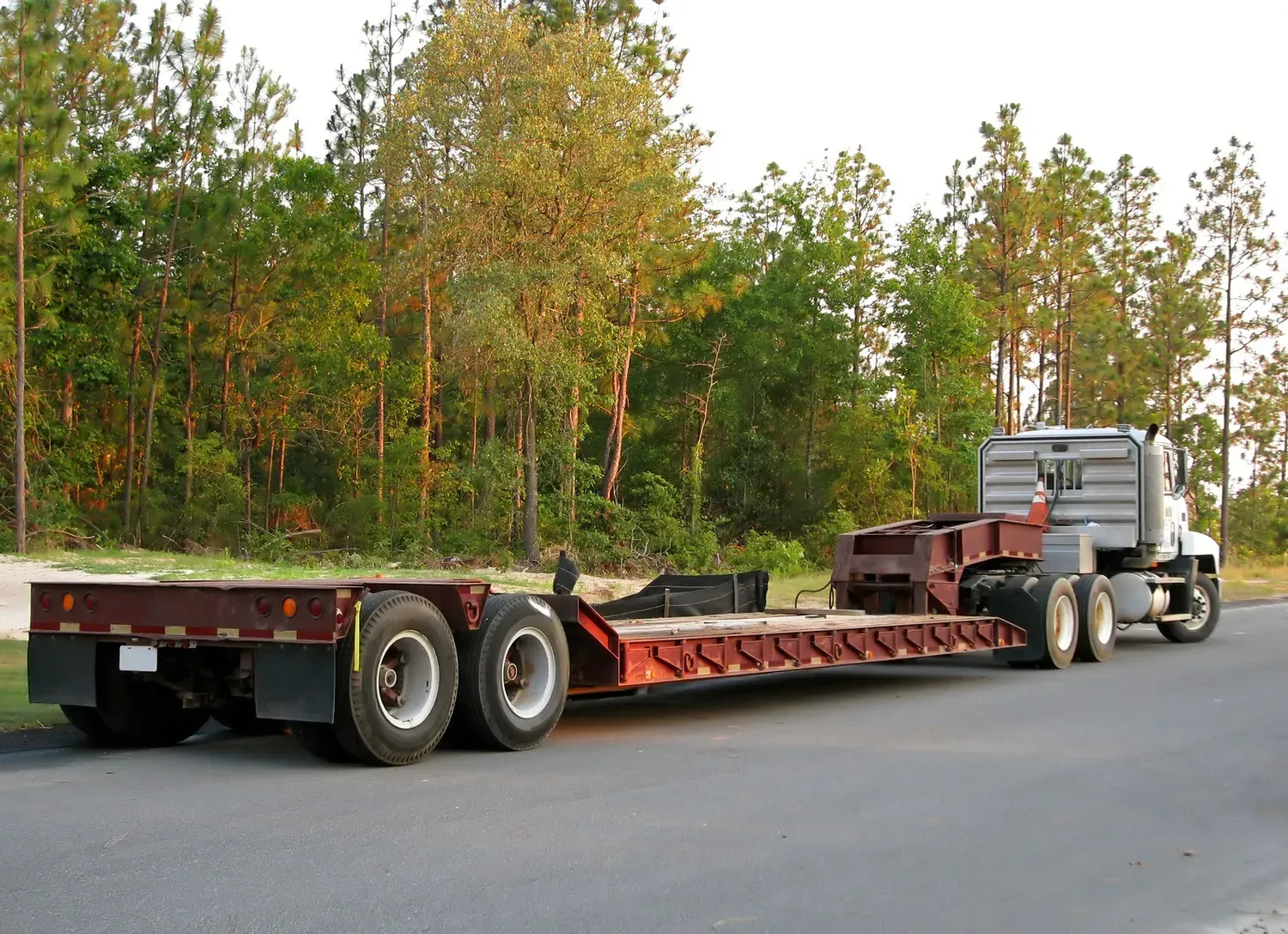
For flatbed freight and oversized loads, the mode question often takes care of itself — most over-dimensional cargo doesn't fit on a standard LTL carrier's equipment. Understanding when flatbed is the right call and how over-dimensional freight moves are separate decisions from the truckload vs. LTL question — but they're part of the same mode selection discipline.

And regardless of mode, understanding what carrier liability actually covers versus what it doesn't is a separate question that too many shippers skip until they file their first large claim.

Consolidation: The Option Most Shippers Don't Consider

There's a middle ground between LTL and full truckload that often gets overlooked: consolidation, or what's sometimes called a partial truckload. When you have more freight than a standard LTL shipment but not enough to justify a dedicated truck, a consolidation program can fill the gap — combining your freight with one or two other shippers on the same lane in a way that gives you better pricing and fewer terminal touches than standard LTL.

For Midwest manufacturers with regular outbound lanes — weekly shipments from St. Louis to Minneapolis, or bi-weekly moves from Indianapolis to the Southeast — consolidation programs can offer a meaningful cost reduction over spot LTL, with better transit reliability than a fully consolidated LTL move.

Making the Right Call, Lane by Lane

The most accurate mode selection happens at the lane level, not the company policy level. A blanket rule — "we ship LTL for anything under a full trailer" — will be right on some lanes and wrong on others. The right discipline is evaluating your primary lanes individually: what's the cost difference between modes at your typical shipment size? What's the transit time difference? What's the damage history? Does a carrier have dedicated capacity on this lane, or will you be going to the spot market?

This is the kind of analysis a good freight management partner runs for you as part of ongoing lane optimization — not just as a one-time exercise. If you're making mode decisions by habit instead of by data, you're almost certainly leaving money on the table on at least a few of your lanes.

Want a lane-by-lane mode analysis? Talk to the McClain team — it's usually a short conversation with a clear answer.

Recent Posts

By Dan McClain July 11, 2026
Evaluating 3PL services in the Midwest? Use this practical guide to compare providers, ask the right questions, and avoid common mistakes in logistics outsourcing.
By Dan McClain July 6, 2026
Midwest warehousing strategy can make or break your distribution costs. Here's how shippers in St. Louis, Kansas City, and Chicago are using 3PL storage to cut freight spend.
By Dan McClain July 4, 2026
Managing freight in St. Louis? This guide covers how freight management services work, what they cost, and how to choose the right provider for your shipping needs.
By Dan McClain June 29, 2026
LTL freight across the Midwest is more complex than most shippers realize. Here's how the hub network really works — and how to stop overpaying on your LTL lanes.
By Dan McClain June 27, 2026
Midwest businesses face real supply chain pressures in 2026. Here's what's driving disruption and how supply chain management services can help you stay ahead.
By Dan McClain June 22, 2026
Midwest manufacturers in St. Louis, Chicago, and Detroit are leaving money on the table with every shipment. Here are the six freight spend leaks to fix first.
By Dan McClain June 20, 2026
LTL freight can save Missouri businesses significant money on shipping — if you use it correctly. Here's what St. Louis shippers need to know about less-than-truckload freight.
By Dan McClain June 15, 2026
Choosing the wrong 3PL costs more than you think. Here's what Midwest shippers in St. Louis, Chicago, and Kansas City should look for before signing a contract.
By Dan McClain June 13, 2026
Choosing a 3PL in St. Louis? Learn what to look for in a logistics partner, questions to ask, and red flags to avoid before you sign anything.
st louis logistics companies
By Dan McClain June 3, 2026
St. Louis sits at the center of the U.S. freight network. Discover why businesses across the Midwest rely on STL logistics companies to move goods efficiently.
Show More