

Freight Management for Midwest Manufacturers: How to Stop Overpaying on Every Shipment

Dan McClain • June 22, 2026

Share this article

Most Midwest manufacturers know they're probably overpaying on freight. They just don't have the bandwidth to prove it. The shipping manager is already juggling carrier calls, exception management, and a spreadsheet that hasn't been updated since Q3. The CFO wants answers. And the data to surface the real problem is buried across three systems and a handful of carrier invoices.

This happens in plants across the I-70 corridor — from Kansas City to Columbus, from St. Louis to Detroit. The freight spend problem isn't usually one big thing. It's six or seven smaller things compounding quietly, month over month, until someone finally asks why logistics costs are up 18% year-over-year with no obvious explanation.

Here's what to look for — and what a good freight management partner should be catching before you have to ask.

1. Freight Classification Errors That Nobody Catches

The NMFC (National Motor Freight Classification) system is complex, and misclassifying freight is more common than most shippers realize. When a product ships under the wrong class, you're either overpaying consistently — or you're underpaying and getting hit with carrier adjustments after the fact that are nearly impossible to dispute.

A manufacturer in Indianapolis once discovered they'd been shipping industrial components at class 85 for two years when the correct class was 65. The difference on a recurring lane running three loads a week was significant. Nobody caught it because nobody was auditing. The carrier certainly wasn't going to flag it.

Proper freight management means someone is watching classification on your recurring lanes and flagging anything that doesn't look right. That requires both freight expertise and technology — neither alone is enough.

2. Reactive Booking Instead of Planned Capacity

Booking freight the day before a pickup costs more than booking it three days out. That's not news — but for manufacturers running lean operations, advance planning often gets sacrificed when production schedules shift. The result is a habitual reliance on spot market rates that, over 12 months, can add meaningfully to your freight spend versus contracted rates.

The fix isn't just better planning internally. It's having a freight management partner who has committed carrier capacity on your primary lanes — so when production moves, you're pulling from an existing capacity pool rather than going to the spot market cold. For high-volume lanes between Chicago, St. Louis, and Columbus, this distinction alone can represent five to eight percent of total freight cost.

3. Carrier Mix That Hasn't Been Reviewed in Two Years

Most shippers develop carrier relationships over time and then stop evaluating them. The carrier who was competitive on your Kansas City to Memphis lane three years ago may not be today. Rate environments shift. Carrier operations change. A carrier that was reliable at 97% on-time last year may have added volume that stretched their network.

Good freight management means running a regular carrier scorecard — not just on price, but on on-time performance, claims ratio, and communication. The KPIs that matter most in freight management aren't always the ones that are easiest to track, but they're the ones that tell you whether your carrier mix is actually working.

4. Lack of Freight Visibility Creating Downstream Costs

When you don't know where a shipment is, someone on your team spends time finding out. Multiply that across the number of active loads you're running at any given time, and you're looking at real labor overhead — plus the harder-to-quantify cost of customer service calls when a retailer or downstream manufacturer is waiting on parts.

Midwest manufacturers shipping just-in-time components to automotive plants in Detroit or steel service centers in Chicago understand this problem acutely. A two-hour delay that you knew about at 6am is a recoverable problem. The same delay discovered at noon when the line is already waiting is a different conversation entirely.

Real supply chain visibility means automated exception alerts, not a tracking portal you have to manually refresh. The difference is whether your team is proactive or reactive — and that difference has a dollar value.

5. No Centralized View of Total Freight Spend

When freight is managed in silos — different carriers handling different lanes, invoices coming in from multiple sources, accessorial charges buried in line items — the total picture never surfaces clearly. You know what you paid on individual loads. You don't know whether your total freight spend is optimized, or whether you've been paying for inefficiencies that a consolidated view would make obvious immediately.

A supply chain control tower approach — where all carrier relationships, all load data, and all freight invoices run through a single management layer — gives you the aggregated view that makes real cost reduction possible. You can't optimize what you can't see in total.

6. Accessorial Charges Going Unaudited

Fuel surcharges, liftgate fees, residential delivery charges, detention, layovers — accessorial charges can add 15 to 25 percent to a base freight rate, and most shippers aren't auditing them systematically. Carriers sometimes apply accessorials that aren't warranted, and without a freight audit process, those charges just get paid.

For a manufacturer in St. Louis running 500+ loads per year, even a two percent over-charge rate on accessorials adds up fast. A proper freight management program includes invoice audit as a standard component — not as an occasional spot-check.

Where to Start

If you're seeing costs climb without a clear explanation, start with your top five lanes by spend. Pull the last 12 months of invoices, look at the rate trend, and check what you've been paying in accessorials. That 30-minute exercise usually surfaces something worth investigating.

If you want a second set of eyes on it, that's exactly what a freight management conversation with McClain is for. We work with manufacturers across the Midwest — from Kansas City to Columbus, St. Louis to Chicago — and we can usually identify meaningful savings opportunities in the first review.

Let's take a look at your freight spend. Reach out here and we'll set up a no-obligation review.

Recent Posts

Aerial view of a highway interchange beside a dense container port with stacked colorful shipping containers
By Dan McClain August 3, 2026
Non-asset based 3PLs give Midwest shippers more carrier options, better rates, and no conflict of interest. Here's why more Missouri and Illinois shippers are making the switch.
Aerial view of a truck loading dock with parked trailers, yellow lane markings, and a curved roadway.
By Dan McClain August 1, 2026
Not sure if 3PL services are right for your business? This guide explains what third-party logistics providers do and when it makes sense to partner with one in St. Louis.
Industrial warehouse aisle with machinery, pallets, and blue bins along a marked concrete floor
By Dan McClain July 27, 2026
Should Midwest manufacturers manage logistics in-house or outsource to a 3PL? Here's an honest cost comparison — including the hidden expenses most operations teams miss.

Three workers stand beside stacked pallets in a warehouse aisle, viewed from above.
By Dan McClain July 25, 2026
Comparing logistics services in St. Louis? Learn what separates a strong logistics partner from a generic vendor and how to find the right fit for your business.
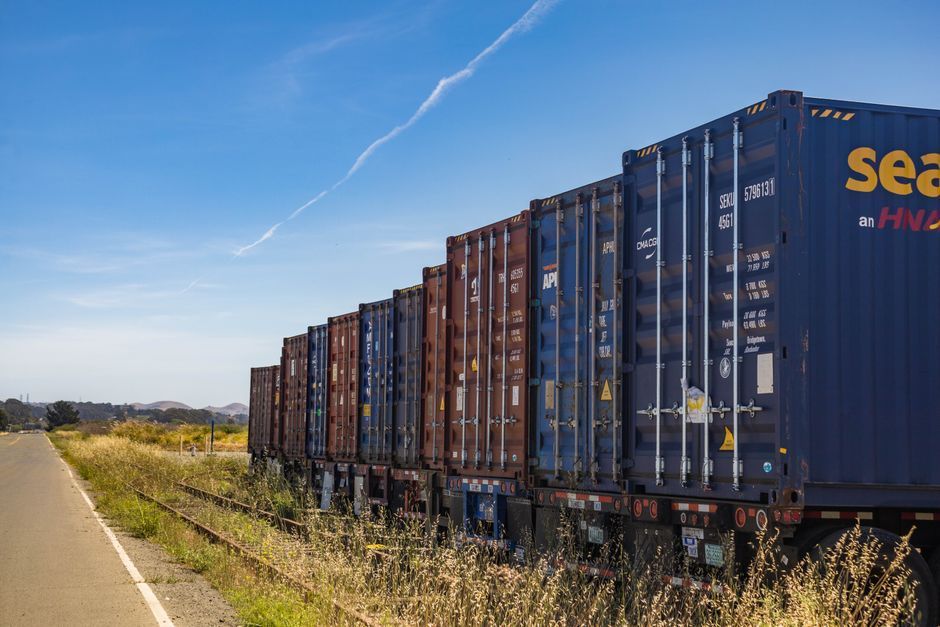
Long freight train of shipping containers beside a rural road under a blue sky
By Dan McClain July 20, 2026
Intermodal shipping through the Midwest rail network is one of the most underused cost-reduction tools in freight. Here's when it makes sense — and when it doesn't.

Export goods report with a blue bar chart on a white page
By Dan McClain July 18, 2026
Supply chain management explained for St. Louis businesses. Learn what SCM covers, why it matters, and how a local supply chain service can improve your operation.

By Dan McClain July 13, 2026
The truckload vs. LTL decision isn't just about weight. Midwest shippers in St. Louis, Chicago, and Columbus are leaving money behind by defaulting to the wrong mode.
By Dan McClain July 11, 2026
Evaluating 3PL services in the Midwest? Use this practical guide to compare providers, ask the right questions, and avoid common mistakes in logistics outsourcing.
By Dan McClain July 6, 2026
Midwest warehousing strategy can make or break your distribution costs. Here's how shippers in St. Louis, Kansas City, and Chicago are using 3PL storage to cut freight spend.
By Dan McClain July 4, 2026
Managing freight in St. Louis? This guide covers how freight management services work, what they cost, and how to choose the right provider for your shipping needs.
Show More