

What Is a Non-Asset Based 3PL — and Why Midwest Shippers Are Moving Away from Asset-Based Carriers

Dan McClain • August 3, 2026

Share this article

When you hire a carrier that also owns trucks, their incentive is to fill their trucks. That's not a criticism — it's a business model. But it's worth understanding before you sign a contract, because it shapes every recommendation they make about how to move your freight.

A non-asset based 3PL owns no trucks. No trailers, no terminals, no drivers on payroll. Their business model is built entirely around finding you the best carrier for every load — and their incentive is to do that well, because that's how they retain your business. For Midwest shippers in Missouri, Illinois, Indiana, and Kansas evaluating logistics partnerships, understanding this distinction is one of the most useful frameworks for evaluating who to work with.

How the Asset-Based Model Creates Conflicts of Interest

An asset-based carrier has fixed costs: truck payments, driver wages, insurance, terminal overhead. Those costs exist whether the trucks are full or empty. So when you call an asset-based carrier and ask for the best solution for your freight, they're answering that question with one eye on their own equipment utilization.

This creates real friction in specific situations. What happens when your freight needs to move on a lane where the asset-based carrier's trucks aren't positioned well? You often get a higher rate, a slower transit time, or a service decline — not because it's the best outcome for you, but because it's the most convenient outcome for their equipment.

What happens when a better carrier option exists for your specific freight type, lane, or transit requirement? An asset-based provider has no financial incentive to recommend it. A non-asset based 3PL has every incentive to find it.

What Non-Asset Based Actually Means in Practice

A non-asset based 3PL — sometimes called a freight broker, though the full-service version is more than that — acts as an intermediary between shippers and a network of carriers. Their value is in the breadth and quality of that carrier network, their ability to negotiate competitive rates across it, and the technology and expertise they use to match loads to the right carrier for each move.

For a manufacturer in St. Louis or Kansas City shipping across multiple modes — truckload on some lanes, LTL on others, intermodal where the distance and transit time allow — a non-asset based 3PL can optimize across all of those options without any bias toward a particular mode or carrier. The distinction between a freight broker and a full-service 3PL matters here: a broker handles individual transactions, while a 3PL manages your freight program holistically — tracking performance, optimizing carrier mix, auditing invoices, and providing visibility across all your loads.

Rate Leverage: Why Non-Asset Based 3PLs Often Beat Carrier Direct Rates

A common assumption is that going directly to a carrier eliminates the middleman markup and therefore produces better rates. This is often wrong. A non-asset based 3PL that moves significant freight volume across a carrier network has negotiating leverage that individual shippers rarely have. The 3PL's aggregate volume produces contract rates that are frequently lower than what a mid-market shipper in Springfield, MO or Peoria, IL could negotiate independently.

Add in the 3PL's ability to use spot market timing strategically — booking loads when capacity is available at favorable rates rather than reactively — and the total freight spend outcome through a well-run non-asset based 3PL often beats direct carrier relationships, not just on price but on service consistency.

Insurance, Liability, and Financial Stability

One area where the non-asset based model requires careful evaluation is financial strength. Unlike an asset-based carrier whose trucks and terminals represent tangible collateral, a non-asset based 3PL's strength is in its carrier relationships, technology, and operational capacity. Understanding your 3PL's insurance coverage and financial stability is critical regardless of model — but particularly important in the non-asset space, where the quality of the provider varies significantly.

What to look for: cargo liability coverage that's appropriate for your freight values, sufficient errors and omissions coverage, and a track record of claims handling that reflects genuine accountability. A non-asset based 3PL that's been operating in the Midwest market for years with established carrier relationships and a documented claims history is a fundamentally different risk profile than a newer entrant with thin carrier coverage.

Is Non-Asset Based the Right Model for You?

For most mid-market Midwest shippers — manufacturers in St. Louis, Kansas City, and Indianapolis with diverse freight across multiple lanes and modes — non-asset based is the model that produces the best combination of rate, service, and flexibility. Where it sits in the broader spectrum from 3PL to 4PL depends on how much supply chain oversight you need beyond pure freight execution.

McClain is a non-asset based 3PL. We've been moving freight for Midwest shippers for years, and our model is built around finding the right carrier for every load — not filling our own trucks. If that's the kind of logistics relationship you're looking for, we're worth a conversation.

Talk to our team: Contact McClain here.

Recent Posts

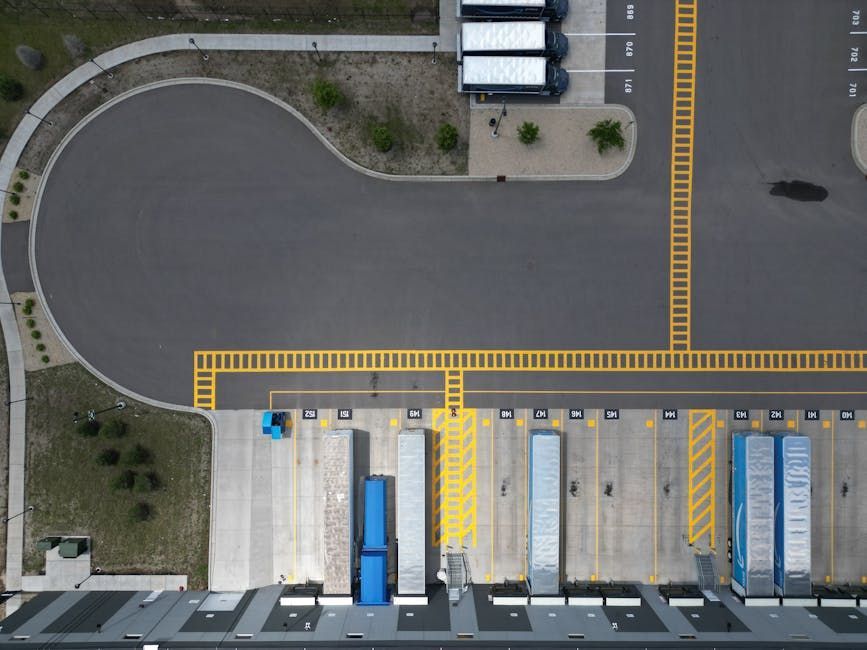
Aerial view of a truck loading dock with parked trailers, yellow lane markings, and a curved roadway.
By Dan McClain August 1, 2026
Not sure if 3PL services are right for your business? This guide explains what third-party logistics providers do and when it makes sense to partner with one in St. Louis.
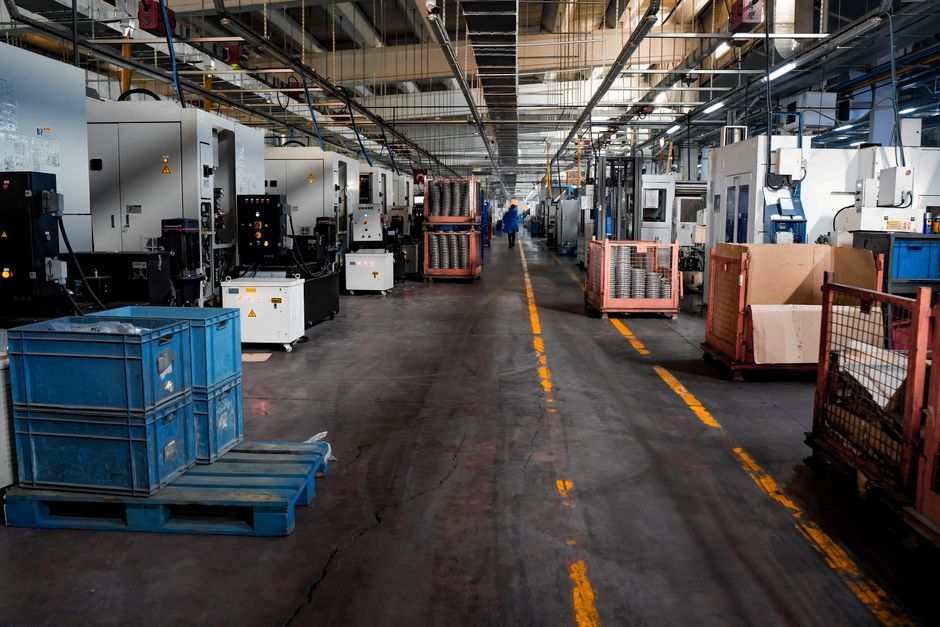
Industrial warehouse aisle with machinery, pallets, and blue bins along a marked concrete floor
By Dan McClain July 27, 2026
Should Midwest manufacturers manage logistics in-house or outsource to a 3PL? Here's an honest cost comparison — including the hidden expenses most operations teams miss.
Three workers stand beside stacked pallets in a warehouse aisle, viewed from above.
By Dan McClain July 25, 2026
Comparing logistics services in St. Louis? Learn what separates a strong logistics partner from a generic vendor and how to find the right fit for your business.
Long freight train of shipping containers beside a rural road under a blue sky
By Dan McClain July 20, 2026
Intermodal shipping through the Midwest rail network is one of the most underused cost-reduction tools in freight. Here's when it makes sense — and when it doesn't.
Export goods report with a blue bar chart on a white page
By Dan McClain July 18, 2026
Supply chain management explained for St. Louis businesses. Learn what SCM covers, why it matters, and how a local supply chain service can improve your operation.

By Dan McClain July 13, 2026
The truckload vs. LTL decision isn't just about weight. Midwest shippers in St. Louis, Chicago, and Columbus are leaving money behind by defaulting to the wrong mode.

By Dan McClain July 11, 2026
Evaluating 3PL services in the Midwest? Use this practical guide to compare providers, ask the right questions, and avoid common mistakes in logistics outsourcing.
By Dan McClain July 6, 2026
Midwest warehousing strategy can make or break your distribution costs. Here's how shippers in St. Louis, Kansas City, and Chicago are using 3PL storage to cut freight spend.
By Dan McClain July 4, 2026
Managing freight in St. Louis? This guide covers how freight management services work, what they cost, and how to choose the right provider for your shipping needs.
By Dan McClain June 29, 2026
LTL freight across the Midwest is more complex than most shippers realize. Here's how the hub network really works — and how to stop overpaying on your LTL lanes.
Show More